Generate Public Key From Csr Openssl
Wep wpa key generator apk. You will also be prompted for information to populate the CSR. At the command line, type: $ openssl req -new -key /path/to/wwwservercom.key -out /path/to/wwwservercom.csr. This will fire up OpenSSL, instruct it to generate a certificate signing request, and let it know to use a key we are going to specify – the one we just created, in.
The following instructions will guide you through the CSR generation process on Nginx (OpenSSL). To learn more about CSRs and the importance of your private key, reference our Overview of Certificate Signing Request article. If you already generated the CSR and received your trusted SSL certificate, reference our SSL Installation Instructions and disregard the steps below.
1. Log in to your server’s terminal.
You will want to log in via Secure Shell (SSH).
2. Enter CSR and Private Key command
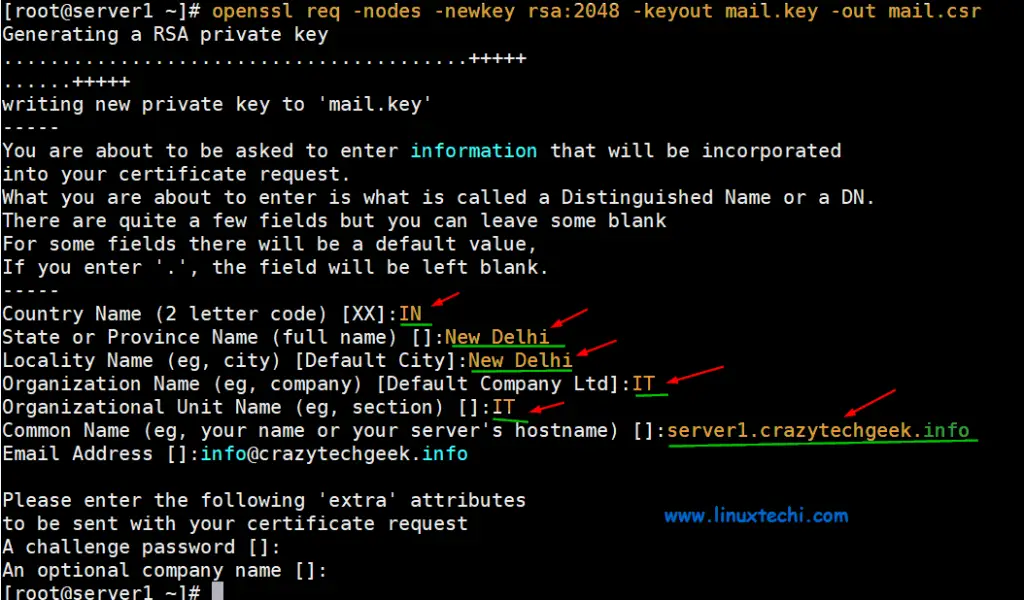
Generate a private key and CSR by running the following command:
Here is the plain text version to copy and paste into your terminal:
- A CSR is a file containing your SSL Certificate application information, including your Public Key. Certificate Auto-Requester: We provides a useful tool to automatically create a public/private key pair on your local machine then use this key pair to generate a CSR and automatically submit it to us over a secure SSL connection to create your certificate for Apache.
- Generate a 2048 bit RSA Key. You can generate a public and private RSA key pair like this: openssl genrsa -des3 -out private.pem 2048. That generates a 2048-bit RSA key pair, encrypts them with a password you provide and writes them to a file. You need to next extract the public key file.
- There's no way to generate a new key from it (because it already has a key). If you want to get the public key that's inside the certificate, you must read it using openssl x509 command. Something like openssl x509 -text -in crtfile (or omit 'openssl' if you're inside OpenSSL prompt).
- Sep 11, 2018 The first thing to do would be to generate a 2048-bit RSA key pair locally. This pair will contain both your private and public key. You can use Java key tool or some other tool, but we will be working with OpenSSL. To generate a public and private key with a certificate signing request (CSR), run the following OpenSSL command.
- Generate a certificate signing request. Last updated on: 2019-12-20. If you want to generate a CSR for multiple host names, we recommend using the Cloud Control Panel or the MyRackspace Portal. Install OpenSSL. It contains encoded details of the CSR and your public key.
Note:Replace “server ” with the domain name you intend to secure.
3. Enter your CSR details
Enter the following CSR details when prompted:
Generate Key With Openssl
- Common Name: The FQDN (fully-qualified domain name) you want to secure with the certificate such as www.google.com, secure.website.org, *.domain.net, etc.
- Organization: The full legal name of your organization including the corporate identifier.
- Organization Unit (OU): Your department such as ‘Information Technology’ or ‘Website Security.’
- City or Locality: The locality or city where your organization is legally incorporated. Do not abbreviate.
- State or Province: The state or province where your organization is legally incorporated. Do not abbreviate.
- Country: The official two-letter country code (i.e. US, CH) where your organization is legally incorporated.
Note: You are not required to enter a password or passphrase. This optional field is for applying additional security to your key pair.
Openssl Generate Csr On Windows
4. Generate the order
Generate Private Key And Csr Openssl
Locate and open the newly created CSR in a text editor such as Notepad and copy all the text including:
Note 1: Your CSR should be saved in the same user directory that you SSH into unless otherwise specified by you.
Note 2: We recommend saving or backing up your newly generate “.key ” file as this will be required later during the installation process.
Return to the Generation Form on our website and paste the entire CSR into the blank text box and continue with completing the generation process.
Upon generating your CSR, your order will enter the validation process with the issuing Certificate Authority (CA) and require the certificate requester to complete some form of validation depending on the certificate purchased. For information regarding the different levels of the validation process and how to satisfy the industry requirements, reference our validation articles.
After you complete the validation process and receive the trusted SSL Certificate from the issuing Certificate Authority (CA), proceed with the next step using our SSL Installation Instructions for Nginx using OpenSSL.
Was this article helpful?
Related Articles
To create a certificate, you first need to create a Certificate Signing Request (CSR). You can send the CSR to a certification authority, or use it to create a self-signed certificate.
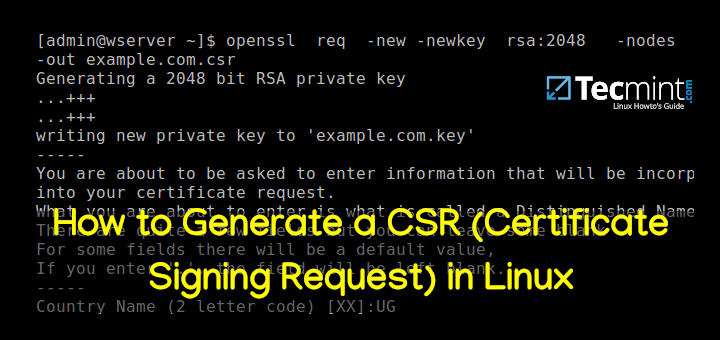
Use OpenSSL to Generate a CSR
OpenSSL is installed with most GNU/Linux distributions. To download the source code or a Windows binary file, go to http://www.openssl.org/ and follow the installation instructions for your operating system. You can use OpenSSL to convert certificates and certificate signing requests from one format to another. For more information, see the OpenSSL man page or online documentation.
- Open a command line interface terminal.
Make sure you run the command prompt as an administrator. You can do this by right-clicking the command prompt shortcut in Windows.
- To generate a private key file called privkey.pem in your current working directory, type openssl genrsa -out privkey.pem 2048
- Type openssl req -new -key privkey.pem -out request.csr
This command generates a CSR in the PEM format in your current working directory. - When you are prompted for the x509 Common Name attribute information, type your fully-qualified domain name (FQDN). Use other information as appropriate.
- Follow the instructions from your certificate authority to send the CSR.
To create a temporary, self-signed certificate until the CA returns your signed certificate:
- Create a plain text file named extensions.txt.
- Add this text to the file:
basicConstraints=CA:TRUE,pathlen:0
Norton security 2016 key generator. keyUsage=digitalSignature,keyEncipherment,keyCertSign,cRLSign
extendedKeyUsage=serverAuth
subjectKeyIdentifier=hash
authorityKeyIdentifier=keyid,issuer
- Open a command line interface terminal.
- Type openssl x509 -req -days 30 -in request.csr -signkey privkey.pem -extfile extensions.txt -out sscert.cert
This command creates a certificate inside your current directory that expires in 30 days with the private key and CSR you created in the previous procedure.
You cannot use a self-signed certificate for VPN remote gateway authentication. We recommend that you use certificates signed by a trusted Certificate Authority.